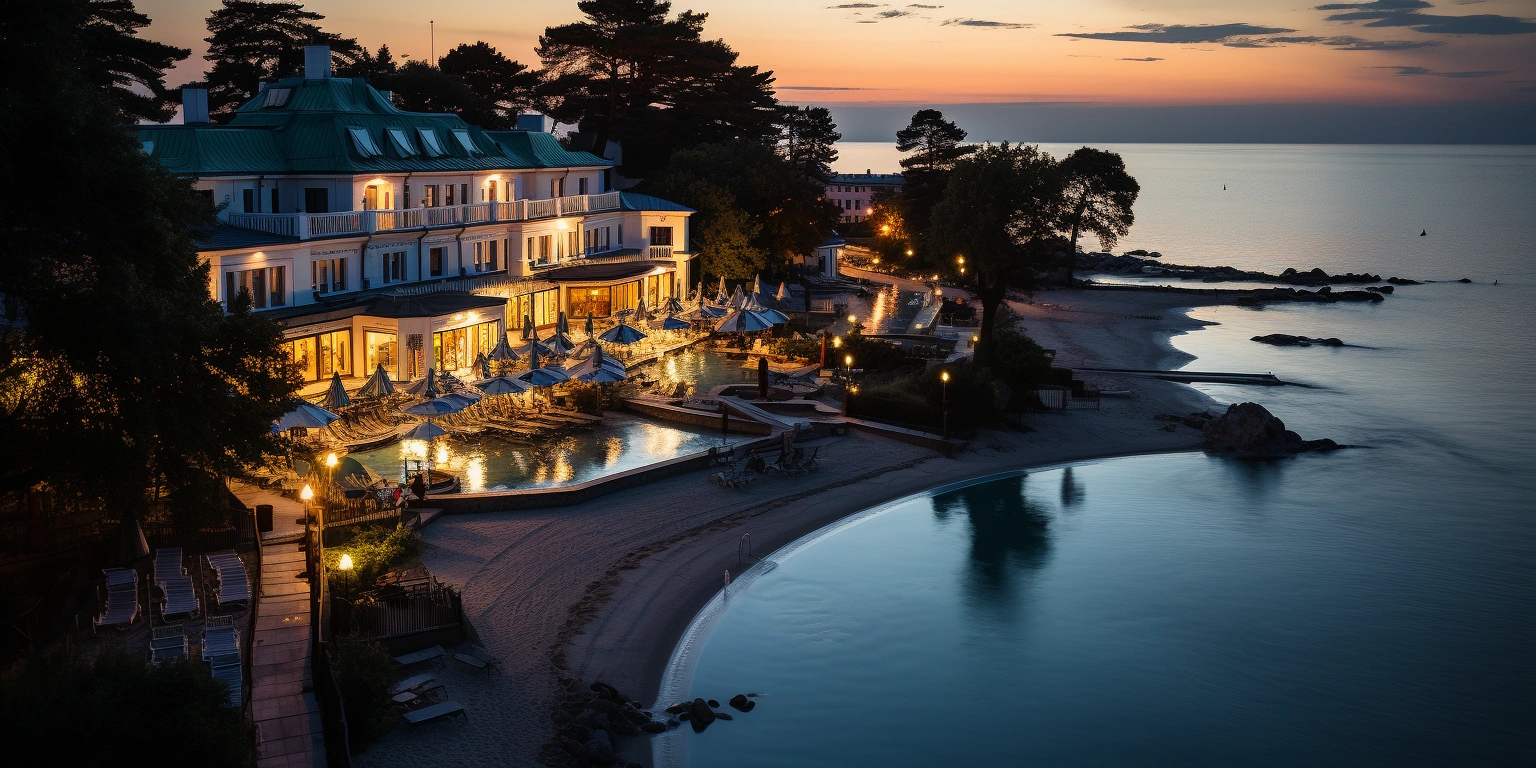
Best Seaside Hotels for Business Travel: The Definitive Corporate Guide
The intersection of corporate mobility and littoral geography has forged a distinct operational category within global real estate and hospitality management. As professional travel models evolve toward hybrid work structures and extended “bleisure” itineraries, properties positioned along marine boundaries are increasingly evaluated through an analytical lens that extends far beyond leisure amenities. Sourcing assets capable of supporting executive productivity while maintaining luxury service standards requires an understanding of infrastructure resilience, data security, acoustic insulation, and ergonomic space design under challenging coastal microclimates.
Evaluating properties that successfully accommodate executive mobility involves scrutinizing back-of-house telecommunication redundancies, meeting room throughput, acoustic mitigation against marine environments, and workflow integration for high-performance travelers. From urban waterfront business hotels equipped with high-density fiber networks to remote island sanctuaries integrating dedicated executive co-working pods, these environments operate as complex socio-technical systems. The long-term viability and performance of these assets depend on striking an unyielding balance between serene coastal aesthetics and the uncompromising infrastructure demands of modern enterprise.
This analysis establishes a definitive reference for understanding, evaluating, and categorizing the systemic frameworks that govern executive hospitality assets situated along coastal borders. By unpacking structural variations, operational risk profiles, economic models, and governance frameworks, this inquiry provides a comprehensive framework for asset managers, corporate travel planners, and hospitality developers navigating the complexities of modern business travel infrastructure.
Understanding “best seaside hotels for business travel.”
The phrase best seaside hotels for business travel is frequently flattened by consumer travel blogs and automated aggregators that reduce corporate hospitality infrastructure to promotional marketing copy, stock photographs of ocean-view desks, and superficial Wi-Fi availability claims. In professional asset management, commercial real estate development, and corporate travel procurement terms, the phrase denotes a rigorous analytical taxonomy used to evaluate properties based on enterprise-grade network security, acoustic engineering, ergonomic compliance, business center throughput, and seamless work-life integration capabilities. A common misinterpretation assumes that evaluating properties capable of supporting executive productivity is merely an exercise in verifying whether a desk and a chair are placed inside a guest room. Authentic evaluation requires auditing the redundancy of internet gateway connections, measuring decibel attenuation levels against exterior wind and wave noise, inspecting multi-device power grid configurations, and verifying the physical security of private meeting facilities.
Oversimplifying these commercial assets as interchangeable luxury resorts with business centers ignores the severe operational realities of coastal environments and the rigorous uptime requirements of corporate executives. Asset valuation and professional performance are driven by structural resilience against power surges, salt-spray corrosion mitigation on delicate telecommunications infrastructure, and robust acoustic dampening. Properties built or acquired without accounting for high humidity, electrical grid volatility, or severe seasonal occupancy spikes face rapid technological obsolescence and operational friction, regardless of their aesthetic positioning.
Deep Contextual Background
The evolution of executive-focused coastal hospitality and its supporting service infrastructure reflects broader shifts in telecommunications technology, corporate mobility, and global economic globalization. Throughout the mid-twentieth century, business travel was rigidly separated from leisure environments; corporate executives utilized sterile downtown convention hotels equipped with wired telephone switchboards and formal boardrooms, while seaside properties remained strictly partitioned for seasonal leisure and therapeutic rest. These early coastal assets relied on decentralized analog communications, basic copper-wire telephony, and minimal desktop workspace integration, as remote professional connectivity was practically non-existent.
A profound operational transition accelerated during the late twentieth and early twenty-first centuries, driven by the advent of wireless internet protocols, cloud computing platforms, commercial aviation expansion, and the democratization of laptop technology. Business travelers began demanding hybrid stays that merged professional productivity with high-end leisure environments, prompting progressive resort developers to integrate dedicated business lounges, high-bandwidth fiber optic distribution, and ergonomic suites into coastal master plans. The subsequent rise of the digital nomad economy and flexible corporate work policies further transformed coastal properties from seasonal leisure hubs into year-round operational ecosystems.
In contemporary markets, property design and operational planning must navigate tightening cybersecurity regulations, accelerating climate volatility, and heightened expectations for uninterrupted digital connectivity. Modern blueprints frequently incorporate redundant satellite communication uplinks, smart room automation systems, acoustic isolation assemblies, and modular co-working ecosystems. This marks a definitive evolution from mid-century analog resort writing desks to twenty-first-century cyber-resilient executive facilities capable of supporting high-stakes corporate operations along delicate marine coastlines.
Conceptual Frameworks and Mental Models
Evaluating, operating, and selecting properties that qualify among the best seaside hotels for business travel requires robust mental models that account for variables far beyond standard front-office metrics or leisure review scores.
1. The Acoustic and Thermal Isolation Matrix
This framework quantifies how a property physically separates guest workspaces from exterior environmental disturbances, such as crashing waves, high winds, and coastal wildlife noise, while maintaining optimal indoor thermal comfort and ventilation without mechanical noise pollution.
2. The Network Redundancy and Cybersecurity Architecture Model
This mental model maps the resilience of a property’s digital infrastructure, evaluating primary and secondary internet gateway failovers, encrypted guest network segmentation, and bandwidth allocation protocols designed to withstand high-occupancy corporate video conferencing loads.
3. The Workflow Friction and Ergonomic Compliance Index
This framework assesses the physical and digital friction experienced by a corporate traveler, measuring desk height, chair lumbar support, multi-device power accessibility, and lighting quality against international ergonomic standards.
Key Categories and Variations of Executive Coastal Assets
High-end coastal hospitality assets optimized for professional and corporate use manifest in several distinct structural typologies, each imposing unique operational trade-offs, technological requirements, and service delivery profiles.
-
Metropolitan Harbor Business Towers: Vertical high-rise properties positioned along major commercial shipping and financial waterfronts, offering high-speed elevators, comprehensive conference centers, and executive floor access. Trade-off: Unmatched transit connectivity and robust enterprise fiber networks, balanced against urban ambient noise and lack of natural seclusion.
-
Cliffside Executive Retreat Sanctuaries: Multi-level vertical properties carved into dramatic coastal headlands, featuring private boardrooms, high-bandwidth satellite uplinks, and terraced workstations. Trade-off: Inspiring panoramic views and deep psychological restoration, offset by vertical transit bottlenecks and complex service logistics.
-
Protected Cove Heritage Work-Resorts: Low-profile masonry estates clustered around private micro-harbors, emphasizing private pier meeting spaces, secure private enclaves, and bespoke corporate hospitality. Trade-off: Exceptional acoustic privacy and intimate networking environments, balanced against limited large-scale convention capacity.
-
Dune-Integrated Eco-Work Compounds: Horizontal architectural layouts embedded into coastal dunes, utilizing low-noise electric transport, integrated solar microgrids, and modular outdoor-indoor workspaces. Trade-off: High sustainability credibility and quietude, balanced against challenging subterranean infrastructure maintenance.
-
Island Conference and Incentive Resorts: Sprawling island compounds equipped with dedicated convention pavilions, multi-room translation booths, and high-capacity staging infrastructure for corporate board retreats. Trade-off: Complete isolation from external distractions and comprehensive group facilities, balanced against heavy reliance on complex air and sea transit logistics.
Comparison of Executive Coastal Typologies
| Typology | Primary Geographic Context | Technological Infrastructure | Core Operational Vulnerability | Primary Professional Advantage |
| Metropolitan Harbor Tower | Urban Waterfronts / Ports | Enterprise Fiber & Redundant Power | Urban noise & congestion | Instant financial district access |
| Cliffside Executive Sanctuary | Mediterranean / Pacific Cliffs | High-Bandwidth Satellite / Wi-Fi 7 | Vertical lift / funicular delays | Inspirational deep-focus setting |
| Protected Cove Heritage Estate | Shielded Bays / Fjords | Localized Mesh Networks | Limited large-scale seating | Secure, private board retreats |
| Dune-Integrated Eco-Compound | Sandy Barrier Islands | Solar Microgrids & IoT Mesh | Subterranean utility access | Low-distraction green work environment |
| Island Conference Resort | Remote Tropical Atolls | Multi-Gigabit Satellite Uplinks | Air/sea transit dependency | Comprehensive group convention facilities |
Realistic Decision Logic
When selecting a coastal property typology for corporate retreats or executive travel, procurement directors and business travelers must weigh connectivity reliability, meeting capacity, and travel friction. Properties sited in remote tropical archipelagos require extensive satellite communication redundancy, on-site generator backups, and dedicated meeting coordination teams, accepting higher transit overhead in exchange for complete operational privacy and uninterrupted strategic focus. Conversely, properties situated along established metropolitan harbor corridors offer seamless airport transit and robust municipal fiber networks, absorbing higher ambient urban activity in order to maintain rapid connection to regional business hubs.
Detailed Real-World Scenarios and Operational Dynamics
To understand how executive-focused coastal assets perform under operational and technical stress, consider four distinct field scenarios encountered by corporate travel managers, IT directors, and hotel general managers.
Network Gateway Failure During a Global Board Video Conference
A multinational corporation hosts a critical live-streamed shareholder meeting from a cliffside resort, and the primary fiber internet line is severed by a contractor error during coastal landscaping.
-
Failure Mode: The live stream drops instantly, causing catastrophic reputational damage and interrupting multi-million-dollar corporate decisions.
-
Second-Order Effect: Advanced properties seamlessly trigger automated satellite failover protocols within three seconds, maintaining zero packet loss and uninterrupted executive broadcasting.
Acoustic Interference Disrupting Confidential Negotiations
Two executive teams attempt sensitive merger negotiations in an oceanfront glass-walled meeting room, but intense coastal winds and crashing surf create severe acoustic vibration through single-pane glazing.
-
Failure Mode: Confidential conversations are compromised by ambient noise, and participants suffer vocal fatigue trying to speak over structural reverberation.
-
Second-Order Effect: Deployment of double-paned acoustic laminated glass, specialized wall dampening panels, and active white-noise masking systems that neutralize low-frequency wave rumble.
Power Surge Damage to Executive Workstations
A severe coastal electrical storm causes a massive voltage spike across the local municipal grid, frying sensitive computing hardware in the hotel’s business lounge.
-
Failure Mode: Executive guests lose critical work files, laptops are permanently damaged, and productive workflow grinds to a halt.
-
Second-Order Effect: Installation of centralized enterprise-grade Uninterruptible Power Supply (UPS) units and surge suppression matrices across all designated guest workstations and meeting pods.
Ergonomic and Lighting Failures During Extended Work Sessions
An executive books an extended workation suite for a two-week coding sprint, only to find fixed low-height furniture, glaring direct sunlight reflecting off the ocean, and inadequate task lighting.
-
Failure Mode: The guest experiences severe physical strain, eye fatigue, and neck pain, leading to poor review scores and immediate checkout.
-
Second-Order Effect: Provision of fully adjustable ergonomic task chairs, anti-glare window films, and modular multi-temperature LED desk lighting across all executive inventory.
Planning, Cost, and Resource Allocation
Developing and managing the infrastructure required to deliver world-class business travel experiences along coastal boundaries demands sophisticated financial architecture. Beyond standard hospitality operating budgets, enterprise-grade network hardware, acoustic retrofitting, backup power systems, and specialized ergonomic furnishings require substantial capital allocations.
Financial Dynamics and Cost Variability
| Expense Category | Estimated Budget Range (USD) | Cost Drivers & Variables |
| Enterprise Network & Redundant Wi-Fi | $100,000 – $500,000+ | Commercial routers, fiber drops, satellite backup dishes, mesh APs |
| Acoustic Mitigation & Glazing Retrofits | $150,000 – $800,000+ | Soundproof glass, wall insulation, vibration dampers, door seals |
| Ergonomic Workstation Fleet Upgrades | $40,000 – $200,000+ | Adjustable desks, certified ergonomic chairs, multi-port docking hubs |
| Emergency Power & UPS Systems | $200,000 – $1,000,000+ | Commercial diesel generators, whole-property battery storage, industrial UPS |
Opportunity Costs and Resource Optimization
A frequent financial miscalculation in coastal asset development involves underestimating the long-term cost savings of investing in robust digital and acoustic infrastructure during initial construction. While skimping on commercial-grade network architecture and soundproofing reduces upfront capital expenditures, the resulting technical failures, dropped corporate video calls, and negative executive reviews rapidly erode corporate account contracts and repeat business. Allocating capital toward resilient operational infrastructure ensures long-term corporate client retention and higher corporate tariff yields.
Tools, Strategies, and Support Systems
Successfully executing complex corporate and executive hospitality operations requires an integrated network of specialized digital software, hardware tools, and physical support systems.
-
Enterprise Bandwidth Management Software: Network optimization platforms dynamically prioritizing corporate video conferencing packets over casual consumer streaming traffic.
-
Secure Virtual Private Network (VPN) Gateway Infrastructure: Hardened network security layers enabling corporate guests to tunnel securely into enterprise servers without latency bottlenecks.
-
Modular Meeting Space Reservation Suites: Integrated digital booking platforms allowing corporate groups to reserve boardrooms, AV equipment, and catering schedules instantaneously.
-
Retained IT Infrastructure Consultancies: Specialized engineering firms auditing marine salt-corrosion effects on exterior cell towers, Wi-Fi relays, and satellite dishes.
-
Acoustic Diagnostic and Sound-Masking Tools: Professional testing hardware and software evaluating decibel transmission and installing calibrated sound-masking frequencies.
-
Ergonomic Asset Management Tracking Systems: Digital CMMS software logging the maintenance, adjustment, and lifecycle replacement of executive desk chairs and standing mechanisms.
-
Encrypted Digital Key and Check-In Portals: Secure mobile applications allowing traveling executives to bypass front desk queues and access rooms instantly.
-
Dedicated Corporate Concierge Desk Support: Specialized personnel trained to handle urgent printing, courier dispatch, translation, and audiovisual troubleshooting.
Risk Landscape and Failure Modes
The risk profile of corporate-focused coastal hospitality operations combines standard business hotel hazards with severe, compounding environmental and technological vulnerabilities unique to maritime zones.
Compounding Risks in Executive Coastal Operations
-
The Connectivity Bottleneck Cascade: A sudden surge in corporate group video conferencing overwhelms the property’s bandwidth allocation, causing widespread call drops and executive frustration.
-
Marine Salt Corrosion on Network Relays: Exterior Wi-Fi access points and cellular boosters suffer accelerated oxidation from salt spray, resulting in dead zones across outdoor workspaces.
-
Acoustic Fatigue and Sleep Deprivation: Inadequate window sealing allows high winds and surf noise to penetrate guest rooms, destroying the restorative sleep required for executive productivity.
-
Power Disruption and Data Loss: Municipal grid instability combined with delayed generator activation corrupts unsaved executive files and shuts down business center operations.
Governance, Maintenance, and Long-Term Adaptation
Preserving the technical reliability, acoustic integrity, and professional standards of a premier coastal property catering to business travelers requires disciplined adherence to rigorous maintenance schedules and continuous performance governance.
Monitoring and Review Cycles
Property general managers, chief information officers, and engineering directors must execute structured daily network bandwidth audits, weekly acoustic seal inspections, monthly power redundancy tests, and seasonal IT infrastructure overhauls.
Layered Maintenance Checklist
-
Network Gateway and Failover Testing: Weekly automated stress-testing of primary fiber lines and secondary satellite failover switches.
-
Acoustic Seal and Glazing Audits: Monthly physical inspections of door gaskets, window weatherstripping, and sound-dampening wall panels.
-
Ergonomic and Workstation Quality Checks: Bi-weekly inspection and mechanical adjustment of all standing desks, task chairs, and charging ports.
-
Emergency Power and UPS Battery Diagnostics: Monthly load-bank testing of backup diesel generators and runtime verification of uninterruptible power supplies.
Measurement, Tracking, and Evaluation
Evaluating the performance, reliability, and economic viability of a coastal property positioning itself among the best seaside hotels for business travel requires tracking both quantitative technical metrics and qualitative corporate satisfaction signals.
-
Quantitative Metrics: Average internet upload/download speeds per guest, network packet loss percentages, meeting room utilization rates, corporate repeat booking ratios, and corporate ADR (Average Daily Rate).
-
Qualitative Signals: Executive feedback regarding acoustic privacy, workstation comfort, speed of IT support resolution, and overall work-life balance satisfaction.
-
Documentation Standards: Maintaining an exhaustive digital archive recording historical network bandwidth logs, IT maintenance tickets, acoustic audit results, and corporate client feedback histories ensures seamless institutional continuity across management transitions.
Common Misconceptions and Oversimplifications
-
Myth: Any luxury coastal resort with a desk in the room automatically qualifies as a premier destination for business travel.Correction: True executive properties require rigorous acoustic isolation, redundant enterprise-grade internet, ergonomic compliance, and secure meeting facilities that standard leisure resorts lack.
-
Myth: Coastal environments have no impact on high-tech communication infrastructure.Correction: High humidity, salt-spray corrosion, and severe coastal weather require specialized, weather-proofed network hardware and frequent corrosion mitigation.
-
Myth: Corporate travelers care exclusively about high-speed Wi-Fi and pay zero attention to physical wellness or room acoustics.Correction: High-performance executives require restorative sleep free from wave noise and access to wellness facilities to sustain productivity during intensive work trips.
-
Myth: Bandwidth throttling is unnecessary if a property has a high-speed fiber connection installed.Correction: Without dynamic traffic prioritization software, high-bandwidth consumer streaming can easily choke corporate video conferencing streams during peak evening hours.
-
Myth: Meeting rooms in coastal hotels function identically to urban convention center spaces.Correction: Coastal meeting rooms face unique thermal and acoustic challenges from direct sunlight reflection and marine wind loads, demanding specialized architectural engineering.
-
Myth: Once an executive workspace is set up, its hardware and furniture require minimal ongoing inspection.Correction: High-usage ergonomic chairs, standing desk motors, and multi-port charging hubs experience rapid wear and tear requiring proactive maintenance.
Ethical, Practical, and Contextual Considerations
Operating executive-focused hospitality facilities within sensitive coastal ecosystems carries a profound ethical and regulatory responsibility. Maintaining strict data privacy compliance under international cybersecurity frameworks ensures that corporate travelers’ sensitive communications remain protected from interception. Furthermore, balancing digital infrastructure expansion with marine conservation mandates, minimizing light pollution that disrupts coastal wildlife, and ensuring fair labor compensation for technical and support staff are fundamental duties that uphold market integrity across the executive travel sector.
Conclusion
The architecture, operation, and maintenance of elite coastal assets positioned as the best seaside hotels for business travel represent the ultimate convergence of enterprise telecommunications engineering, acoustic architectural design, ergonomic science, and executive hospitality management. By moving past superficial promotional marketing and confronting the rigorous operational realities of network redundancy, salt-corrosion mitigation, acoustic isolation, and workspace ergonomics, developers and operators can establish enduring properties of exceptional commercial success and professional reliability. Whether managing metropolitan harbor towers, cliffside retreat sanctuaries, or protected cove estates, these exceptional business-focused properties demand a synthesis of intellectual rigor, technical mastery, and unyielding commitment to professional productivity under shifting environmental conditions.